Many of the EU funding calls most relevant to soil, regenerative agriculture, and carbon farming are built around multi-partner consortia. Below are the kinds of calls where Perennial could participate as the measurement partner, subject to the participation and funding rules of each programme. If one fits you and you're missing the MRV piece, get in touch: we apply where we find the right partners.
These funding calls share a pattern: they increasingly require applicants to show how expected outcomes will be credibly measured and demonstrated. For calls involving soil or carbon outcomes, applications often need to explain how change will be measured, monitored, and reported over time. That measurement work package is often the hardest one to staff, and a weakly defined measurement approach can undermine the credibility of both the methodology and expected impact.
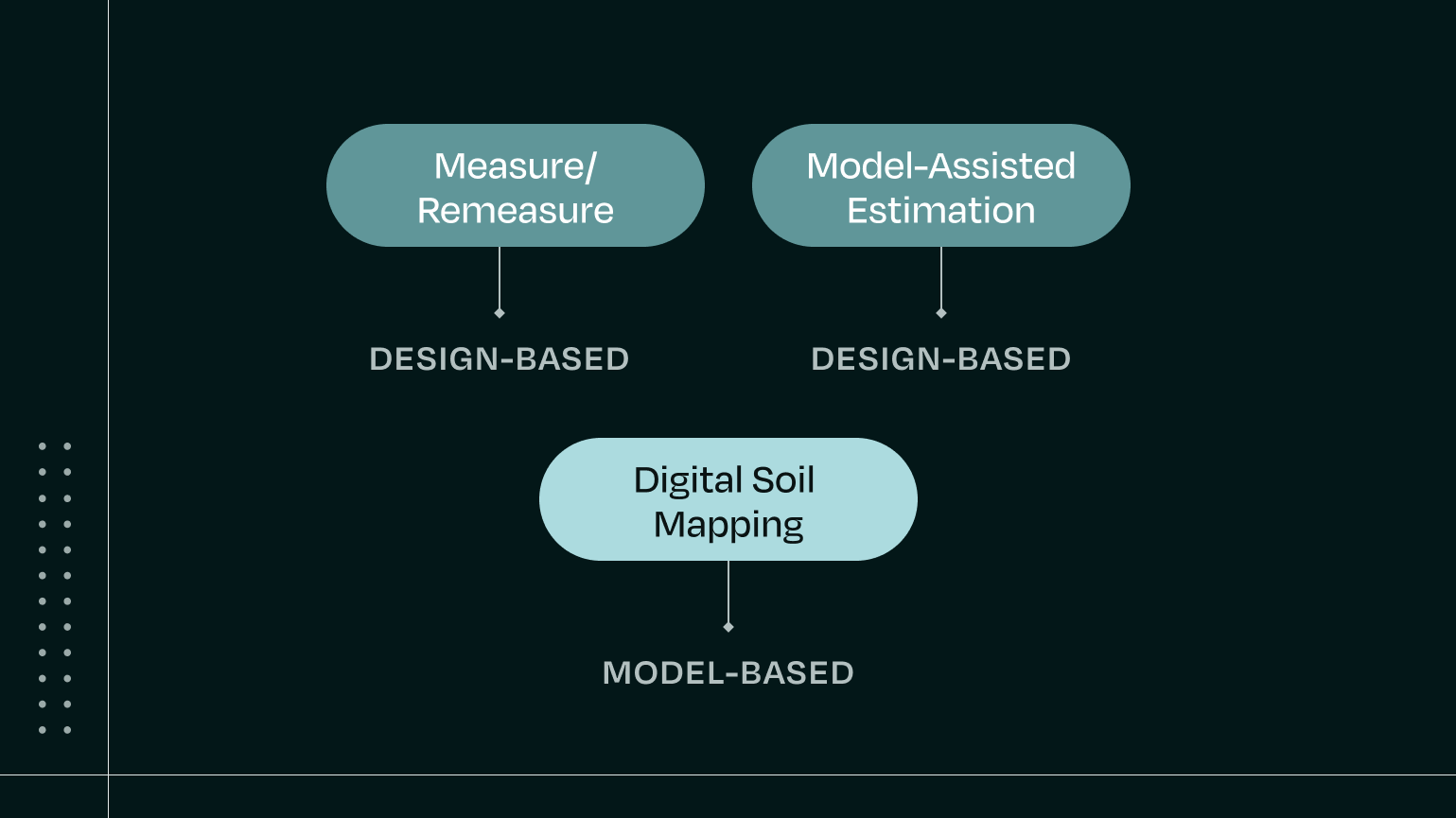
That's the part Perennial covers. We deliver outcome-based soil carbon measurements across crops, land uses, and geographies, with MMRV approaches aligned to applicable standards and registry requirements. Our proprietary digital soil mapping model, ATLAS-SOC, leverages over 350,000 integrated soil samples and is peer-reviewed and third-party validated, with 10M+ acres mapped to date. We also led the development of VT0014, the Verra-approved tool for quantifying soil carbon using digital soil mapping.
Here's how that maps to the funding options on the table.
If you work in Finnish agriculture: the EIT Food Resilient Agriculture Landscape
EIT Food is recruiting a consortium to deliver the Finland Resilient Agriculture Landscape, part of its landscape portfolio. The project focuses on southern Finland's agroecosystems: preserving and restoring soil function to increase farm resilience, improve regional water quality, reduce flood risk, and strengthen habitats vital for the Baltic Sea. The core of the work is transitioning land to regenerative agriculture over three agricultural years, from 2027 to 2029, with a foundation set for progress beyond that.
Before applying, look closely at the structure. The call requires a consortium addressing all five work packages: project management, training and advisory services, a connecting hub, a transition de-risking mechanism, and soil carbon removal MRV. One organization can deliver more than one work package if it can show the capability. In practice, the strongest applications are assembled early, and the evaluation also considers the consortium's relevant experience and the expertise of the teams proposed to lead each work package.
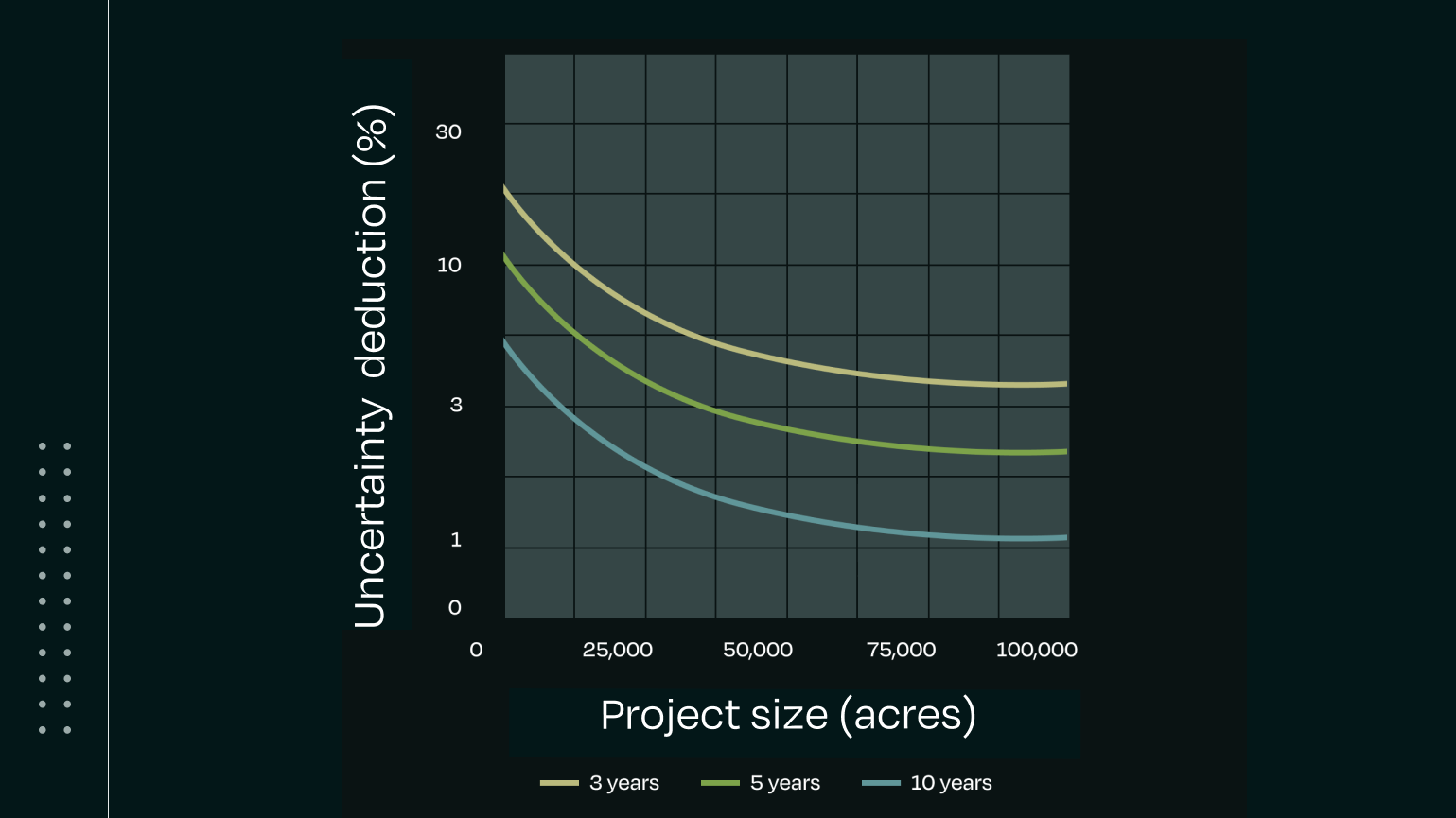
We'd take the soil carbon removal MRV work package, which asks for exactly what we do: the call explicitly requires a methodology combining direct soil sampling, advanced modelling and remote sensing, uncertainty quantification, GHG Protocol and SBTi FLAG alignment, implementation of the carbon estimation model, and a credible third-party verification protocol. A three-year regenerative transition needs a credible baseline and outcome measurement that holds up across the full landscape, and our approach can substantially reduce sampling compared with traditional monitoring, with the sampling design depending on the project.
We're looking for Finnish and Nordic partners for the other four work packages: organizations with training and advisory capacity, farmer networks in southern Finland, and experience running transition finance or de-risking mechanisms.
If you're a carbon project developer or farmer cooperative weighing demonstration funding: the LIFE Programme
Calls under the LIFE Programme's climate action strand fund demonstration and best-practice projects for climate mitigation. The 2026 Climate Change Mitigation calls explicitly support carbon farming and CRCF implementation, including testing tools and approaches for quantification, monitoring, and certification. Before committing, be honest about whether your monitoring plan would hold up: for projects seeking quantified or certified climate outcomes, practice records alone may not provide the evidence needed to demonstrate the resulting carbon impact, and retrofitting measurement after year one is expensive.
We'd bring soil-carbon MRV to carbon farming and CRCF-focused pilot, demonstration, and implementation projects: baseline, monitoring, and verification-ready reporting from the start. This could be a strong fit for developers or cooperatives with EU farmland and a regenerative program planned or underway.
If you're a research institution or university eyeing soil research calls: Horizon Europe's Mission Soil
Calls under "A Soil Deal for Europe" fund research and innovation on soil health, including soil monitoring, Living Labs, and Lighthouses. Mission Soil is about soil health broadly, not soil carbon alone, and Horizon evaluation focuses on excellence, impact, and quality and efficiency of implementation. Pairing research depth with deployed, validated technology strengthens the implementation story and the data management plan, and shortens the path from findings to practice.
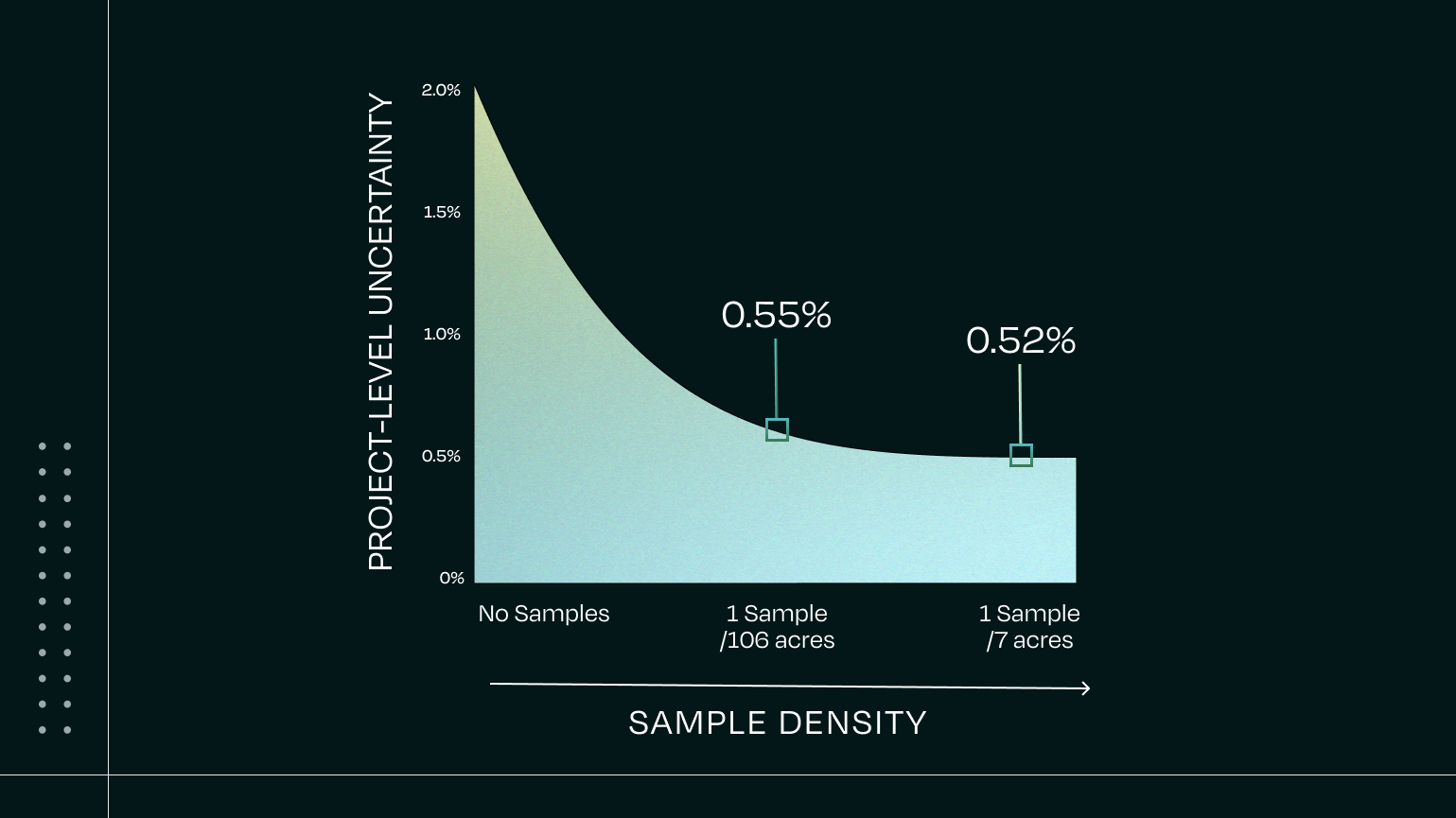
Our validation record is public. In our work with Bayer, project-level uncertainty held near 0.5% across 53,000 acres even as sampling density decreased 15x. If your consortium, Living Lab, or farmer network is preparing for upcoming Mission Soil opportunities where soil carbon is a relevant soil-health outcome, we can cover the SOC quantification component.
If you're a regional authority or organization working across borders: Interreg
Interreg is a family of programmes funding cross-border and transnational cooperation, including sustainable land management across regions. Eligibility rules differ by programme area, but the measurement question is the same everywhere: a multi-country project needs one dataset that holds up across the whole area, and using different national approaches can make comparability and consistent cross-border reporting more difficult.
Our measurement approach delivers one consistent dataset across borders, with implementation, local calibration, and sampling design adapted to the applicable programme and methodology requirements. We're looking for regional authorities, research institutions, and agricultural organizations in eligible cross-border or transnational programme areas.
A note for agronomic and advisory organizations
Many of these calls also benefit from strong training, advisory, and farmer-engagement capacity in the consortium. If you're an agronomy services company or farm advisory organization in the EU, you could be a strong consortium partner across many of these opportunities, even if you've never applied for EU funding before. The soil-carbon MRV workstream is covered; your relationship with farmers is the part we can't replicate.
Want to partner on an EU funding opportunity?
Get in touch with Priti Montanier at pmontanier@perennial.earth, or message us on LinkedIn.
Perennial is an end-to-end MMRV company delivering registry-aligned, outcome-based measurements for any crop, any land use, anywhere in the world. Its Adaptable MMRV approach, powered by Perennial's proprietary ATLAS-SOC digital soil mapping model, delivers the best-fit solution for each project's land, data, and methodology requirements, while reducing sampling by up to 10x. Perennial led the development of VT0014, the Verra-approved tool for quantifying soil carbon using digital soil mapping. Headquartered in Boulder, Colorado, Perennial has raised over $35M and is working toward measuring regenerative outcomes across 100 million acres worldwide.
——
Want to learn more?
- Explore how digital soil mapping fits into our end-to-end MMRV approach
- See how we support Scope 3 programs and agricultural supply chains
- See how we support carbon project developers